Nobel Prize (Abstract)
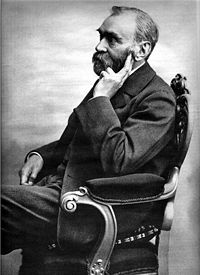 Alfred Bernhard Nobel |
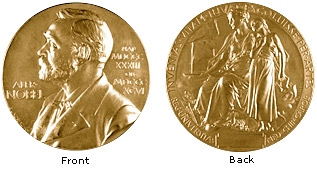
There are five original Nobel Prize categories.
|
Number of Nobel Prize Laureates in Physiology or Medicine by Country
(1901–2025)
|
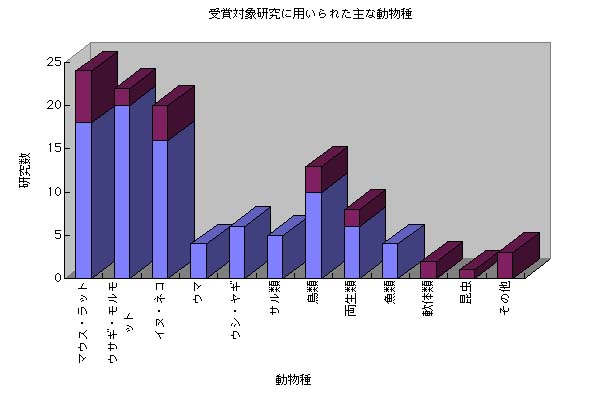
Among the 130 Nobel Prizes in Physiology or Medicine awarded up to 2025,
90 prizes (70%) were awarded for research involving animal experiments.
Nobel Prize in Physiology or Medicine and Animal Experiments
| 1901 | Emil von Behring (Germany) | Serum therapy, especially its application against diphtheria (discovery of antitoxin using guinea pigs) |
| 1902 | Ronald Ross (United Kingdom) | Studies on malaria and its transmission by mosquitoes (discovered malaria parasites in mosquitoes and demonstrated transmission experimentally) |
| 1903 | Niels Ryberg Finsen (Denmark) | Contribution to the treatment of diseases, especially lupus vulgaris, by means of concentrated light radiation |
| 1904 | Ivan Pavlov (Russia) | Research on the physiology of digestion (dogs) |
| 1905 | Robert Koch (Germany) | Investigations and discoveries relating to tuberculosis (guinea pigs, rabbits, mice, rats, hamsters, pigeons, frogs, dogs, and cats) |
| 1906 |
Camillo Golgi (Italy) Santiago Ramón y Cajal (Spain) |
Studies on the structure of the nervous system (mammals, rodents, and birds) |
| 1907 | Alphonse Laveran (France) | Research on the role of protozoa in causing diseases (discovery of malaria parasites in human red blood cells) |
| 1908 |
Paul Ehrlich (Germany) Élie Metchnikoff (Russia) |
Research on immunity (1904 discovery of Trypan Red for trypanosomiasis treatment – mice) (1909 discovery of Salvarsan No. 606 for syphilis treatment – Sahachiro Hata; rabbits and monkeys) (Daphnia and sea cucumbers) |
| 1909 | Theodor Kocher (Switzerland) | Research on the physiology, pathology, and surgery of the thyroid gland (human studies) |
| 1910 | Albrecht Kossel (Germany) | Contributions to cell chemistry through studies of proteins and nucleic substances (fish eggs) |
| 1911 | Allvar Gullstrand (Sweden) | Research on the refractive functions of the eye (human studies) |
| 1912 | Alexis Carrel (France) | Research on vascular suturing and organ transplantation (kidney transplantation in dogs) |
| 1913 | Charles Richet (France) | Research on anaphylactic shock (dogs) |
| 1914 | Robert Bárány (Austria) | Research on the physiology and pathology of the vestibular apparatus of the inner ear (human studies) |
| 1915 ~ 1918 |
No award during World War I | |
| 1919 | Jules Bordet (Belgium) | Research on immunity (investigation of animal sera) |
| 1920 | August Krogh (Denmark) | Discovery of the regulatory mechanism of capillary movement (frogs and other animals); pioneer of comparative physiology |
| 1921 | No award | |
| 1922 |
Archibald Hill (United Kingdom) Otto Fritz Meyerhof (Germany) |
Discoveries concerning heat production in muscles Discovery of the quantitative relationship between oxygen consumption and lactic acid metabolism in muscle (frogs) |
| 1923 |
Frederick Banting (Canada) John Macleod (United Kingdom) |
Discovery of insulin (dogs) |
| 1924 | Willem Einthoven (Netherlands) | Discovery of the electrocardiogram (research on bioelectricity) |
| 1925 | No award | |
| 1926 | Johannes Fibiger (Denmark) | Research on the parasitic theory of cancer (mice) |
| 1927 | Julius Wagner-Jauregg (Austria) | Discovery of the therapeutic value of malaria inoculation in the treatment of general paresis (human studies) |
| 1928 | Charles Nicolle (France) | Research on typhus (chimpanzees and guinea pigs) |
| 1929 |
Christiaan Eijkman (Netherlands) Frederick Gowland Hopkins (United Kingdom) |
Discovery of the anti-neuritic vitamin (chickens) Discovery of growth-promoting vitamins (mice) |
| 1930 | Karl Landsteiner (Austria) | Discovery of human blood groups |
| 1931 | Warburg (Germany) | Discovery of the nature and mode of action of the respiratory enzyme (sea urchins) |
| 1932 | Sherrington (United Kingdom) Adrian (United Kingdom) |
Discoveries concerning the functions of neurons (monkeys) |
| 1933 | Morgan (United States) | Discoveries concerning the role played by chromosomes in heredity (fruit flies) |
| 1934 | Whipple (United States) Minot (United States) Murphy (United States) |
Discovery of liver therapy for anemia (dogs) |
| 1935 | Spemann (Germany) | Discovery of the organizer effect in embryonic development (newts) |
| 1936 | Loewi (United States) Dale (United Kingdom) |
Discovery of chemical transmission of nerve impulses (frogs) (Discovery of acetylcholine) |
| 1937 | Szent-Györgyi (Hungary) | Discoveries in biological combustion processes, particularly with regard to vitamin C and the catalytic action of fumaric acid (chickens) |
| 1938 | Heymans (Belgium) | Discovery of the role played by the sinus and aortic mechanisms in the regulation of respiration (dogs) |
| 1939 | Domagk (Germany) | Discovery of the antibacterial effects of Prontosil (a sulfonamide drug, originally a red dye) (mice, rabbits) |
| 1940 ~ 1942 |
No award during World War II | |
| 1943 | Dam (Denmark) Doisy (United States) |
Discovery of vitamin K (chickens) Discovery of the chemical nature of vitamin K (fish) |
| 1944 | Erlanger (United States) Gasser (United States) |
Discoveries relating to the highly differentiated functions of individual nerve fibers (bullfrogs) |
| 1945 | Fleming (United Kingdom) Chain (United Kingdom) Florey (Australia) |
Discovery of penicillin and its curative effect in various infectious diseases (rats, mice, rabbits, and many other species) |
| 1946 | Muller (United States) | Discovery that X-ray irradiation induces mutations (fruit flies) |
| 1947 | Carl Cori (United States) Gerty Cori (United States) Houssay (Argentina) |
Discovery of the catalytic conversion pathway of glycogen (animal tissues) Discovery of the role played by anterior pituitary hormones in sugar metabolism |
| 1948 | Müller (Switzerland) | Discovery of the strong contact toxicity of DDT against numerous arthropods (monkeys) |
| 1949 |
Hess (Switzerland) Moniz (Portugal) |
Discovery of the functional organization of the diencephalon as a coordinator of visceral activities (animals) Discovery of the therapeutic value of prefrontal leucotomy in certain psychoses (human lobotomy experiments) |
| 1950 |
Kendall (United States) Reichstein (Switzerland) Hench (United States) |
Discoveries relating to adrenal cortex hormones, their structures, and biological effects (dogs, pigs) |
| 1951 | Theiler (Union of South Africa) | Development of the yellow fever vaccine (mosquitoes, monkeys, mice) |
| 1952 | Waksman (United States) | Discovery of streptomycin (animals and eukaryotic organisms) |
| 1953 |
Krebs (United Kingdom) Lipmann (United States) |
Discovery of the citric acid cycle (mammals and birds) Discovery of coenzyme A and its importance in intermediary metabolism (plants and animals) |
| 1954 |
Enders (United States) Weller (United States) Robbins (United States) |
Discovery of the ability of poliomyelitis viruses to grow in various tissue cultures (monkeys and various laboratory animals) |
| 1955 | Theorell (Sweden) | Discoveries concerning the nature and mode of action of oxidation enzymes (horse liver and yeast) |
| 1956 |
Cournand (United States) Richards (United States) Forssmann (Germany) |
Discoveries concerning cardiac catheterization and pathological changes in the circulatory system (dogs) |
| 1957 | Bovet (Italy) | Studies on synthetic curare-like muscle relaxants |
| 1958 |
Beadle (United States) Tatum (United States) Lederberg (United States) |
Discovery of the role of genes in regulating specific biochemical events (the "one gene–one enzyme" theory) (Neurospora) Discoveries concerning genetic recombination and the organization of the genetic material of bacteria (bacteria) |
| 1959 |
Ochoa (United States) Kornberg (United States) |
Discovery of the mechanisms involved in the biological synthesis of ribonucleic acid and deoxyribonucleic acid (Escherichia coli) |
| 1960 |
Burnet (Australia) Medawar (United Kingdom) |
Discovery of acquired immunological tolerance (Burnet's hypothesis was verified through animal experiments) |
| 1961 | Békésy (United States) | Discovery of the physical mechanism of stimulation within the cochlea of the inner ear (mammals) |
| 1962 |
Watson (United States) Crick (United Kingdom) Wilkins (United Kingdom) |
Discovery of the molecular structure of nucleic acids and its significance for information transfer in living organisms (Elucidation of the DNA double-helix structure) |
| 1963 |
Eccles (Australia) Hodgkin (United Kingdom) Huxley (United Kingdom) |
Discoveries concerning the ionic mechanisms involved in excitation and inhibition in the peripheral and central portions of the nerve cell membrane (squid) |
| 1964 |
Bloch (United States) Lynen (Germany) |
Discoveries concerning the mechanisms and regulation of cholesterol and fatty acid metabolism (rats) |
| 1965 |
Jacob (France) Monod (France) Lwoff (France) |
Discoveries concerning the genetic control of enzyme and virus synthesis (Operon theory) (Escherichia coli) (Bacteriophages and polioviruses) |
| 1966 |
Rous (United States) Huggins (United States) |
Discovery of tumor-causing viruses (chickens)
Discovery of hormonal treatment for prostate cancer |
| 1967 |
Granit (Sweden) Hartline (United States) Wald (United States) |
Discoveries concerning the primary physiological and chemical visual processes (arthropods, mollusks, and vertebrates) |
| 1968 |
Holley (United States) Khorana (United States) Nirenberg (United States) |
Elucidation of the genetic code and its function in protein synthesis |
| 1969 |
Delbrück (United States) Hershey (United States) Luria (United States) |
Discoveries concerning the replication mechanism and genetic structure of viruses |
| 1970 |
Katz (United Kingdom) von Euler (Sweden) Axelrod (United States) |
Discoveries concerning the humoral transmitters in nerve terminals and the mechanisms involved in their storage, release, and inactivation |
| 1971 | Sutherland (USA) | Discovery of the mechanisms of hormone action (research on cAMP) |
| 1972 |
Edelman (USA) Porter (UK) |
Discoveries concerning the chemical structure of antibodies |
| 1973 |
Lorenz (Austria) Tinbergen (UK) von Frisch (Austria) |
Establishment of the scientific discipline of ethology (Honeybees) |
| 1974 |
de Duve (Belgium) Palade (USA) Claude (Belgium) |
Discoveries concerning the structural and functional organization of the cell (studies on protein synthesis in cellular organelles) (Rat) |
| 1975 |
Temin (USA) Dulbecco (USA) Baltimore (USA) |
Studies on the interaction between tumor viruses and the genetic material of the cell (Mouse) |
| 1976 | Blumberg (USA) | Discovery of the Australia antigen |
| Gajdusek (USA) | Research on slow virus infections (Chimpanzee) | |
| 1977 |
Guillemin (USA) Schally (Poland) Yalow (USA) |
Discoveries concerning peptide hormone production in the brain (Sheep)
Research leading to the development of radioimmunoassay (RIA) |
| 1978 |
Arber (Switzerland) Smith (USA) Nathans (USA) |
Discovery of restriction enzymes and their application to molecular genetics (Bacteriophages, Haemophilus influenzae) |
| 1979 |
Hounsfield (UK) Cormack (USA) |
Development of computerized X-ray tomography (CT) (Cow brain) |
| 1980 |
Benacerraf (USA) Snell (USA) Dausset (France) |
Discoveries concerning genetically determined structures on the cell surface that regulate immunological reactions |
| 1981 |
Sperry (USA) Wiesel (Sweden) Hubel (USA) |
Studies on the functional specialization of the cerebral hemispheres Research on information processing in the visual system (Cat) |
| 1982 |
Samuelsson (Sweden) Bergström (Sweden) Vane (UK) |
Discoveries concerning prostaglandins and related biologically active substances |
| 1983 | McClintock (USA) | Discovery of transposable genetic elements through studies of maize |
| 1984 |
Jerne (Denmark) Köhler (Germany) Milstein (Argentina) |
Theories concerning the specificity of immune system development and control, and the development of monoclonal antibody production techniques (Mouse, Rabbit) |
| 1985 |
Brown (USA) Goldstein (USA) |
Research on cholesterol metabolism and related diseases (WHHL rabbit) |
| 1986 |
Levi-Montalcini (Italy) Cohen (USA) |
Discovery of nerve growth factor (NGF) and epidermal growth factor (EGF) (Chicken embryo) |
| 1987 | Susumu Tonegawa (Japan) | Discovery of the genetic principle for generating antibody diversity (Mouse) |
| 1988 |
Black (UK) Elion (USA) Hitchings (USA) |
Discoveries of important principles for drug treatment |
| 1989 |
Varmus (USA) Bishop (USA) |
Discovery that the oncogenes of retroviruses originate from normal cellular genes |
| 1990 |
Murray (USA) Thomas (USA) |
Research on organ and cell transplantation in the treatment of human disease (Dog, Sheep, Pig, Cow) |
| 1991 |
Neher (Germany) Sakmann (Germany) |
Discoveries concerning the function of single ion channels in cells |
| 1992 |
Fischer (Switzerland) Krebs (USA) |
Discovery of reversible protein phosphorylation as a biological regulatory mechanism |
| 1993 |
Roberts (UK) Sharp (USA) |
Discovery of split genes (introns) in humans and many other organisms |
| 1994 |
Gilman (USA) Rodbell (USA) |
Discovery of G-proteins and their role in signal transduction in cells |
| 1995 |
Nüsslein-Volhard (Germany) Wieschaus (USA) Lewis (USA) |
Discoveries concerning the genetic control of early embryonic development (Drosophila, Zebrafish) |
| 1996 |
Doherty (Australia) Zinkernagel (Switzerland) |
Studies on the specificity of cell-mediated immune defense (Mouse) |
| 1997 | Prusiner (USA) | Discovery of prions – a new biological principle of infection (Sheep, Mouse, Hamster, and all animals) |
| 1998 |
Furchgott (USA) Ignarro (USA) Murad (USA) |
Discoveries concerning nitric oxide as a signaling molecule in the cardiovascular system (Rabbit, Guinea pig) |
| 1999 | Blobel (USA) | Discovery that proteins possess intrinsic signals governing their transport and localization within cells |
| 2000 |
Carlsson (Sweden) Greengard (USA) Kandel (USA) |
Discoveries concerning signal transduction in the nervous system (Aplysia) |
| 2001 |
Hartwell (USA) Nurse (UK) Hunt (UK) |
Discovery of key regulators of the cell cycle
(Yeast) (Sea urchin) |
| 2002 |
Brenner (UK) Horvitz (USA) Sulston (UK) |
Discoveries concerning genetic regulation of organ development and programmed cell death (Caenorhabditis elegans) |
| 2003 |
Lauterbur (USA) Mansfield (UK) |
Discoveries concerning magnetic resonance imaging (MRI) |
| 2004 |
Axel (USA) Buck (USA) |
Discoveries of odorant receptors and the organization of the olfactory system (Rat) |
| 2005 |
Marshall (Australia) Warren (Australia) |
Discovery of Helicobacter pylori and its role in gastritis and peptic ulcer disease (Human self-experimentation) |
| 2006 |
Fire (USA) Mello (USA) |
Discovery of RNA interference (RNAi) – gene silencing by double-stranded RNA (Many organisms) |
| 2007 |
Evans (UK) Capecchi (USA) Smithies (USA) |
Discovery of principles for introducing specific gene modifications in mice using embryonic stem (ES) cells (Knockout mice) |
| 2008 |
Montagnier (France) Barré-Sinoussi (France) zur Hausen (Germany) |
Discovery of Human Immunodeficiency Virus (HIV)
Discovery of Human Papillomavirus (HPV) causing cervical cancer |
| 2009 |
Blackburn (USA) Greider (USA) Szostak (UK) |
Discovery of how telomeres and the enzyme telomerase protect chromosomes (Tetrahymena) |
| 2010 | Robert G. Edwards (UK) | Development of in vitro fertilization (IVF) |
| 2011 |
Bruce Beutler (USA) Jules Hoffmann (France) |
Research on the activation of innate immunity (Mouse) |
| Ralph Steinman (Canada) | Discovery of dendritic cells and their role in adaptive immunity | |
| 2012 |
John Gurdon (UK) Shinya Yamanaka (Japan) |
Discovery that mature cells can be reprogrammed to become pluripotent stem cells (Mouse) |
| 2013 |
James Rothman (USA) Randy Schekman (USA) Thomas Südhof (USA) |
Discovery of the regulatory machinery governing vesicle traffic, a major transport system in cells (Yeast and mammalian cells) |
| 2014 |
John O'Keefe (USA) May-Britt Moser (Norway) Edvard Moser (Norway) |
Discovery of cells that constitute the brain's positioning system (Mammals) |
| 2015 |
William C. Campbell (Ireland) Satoshi Ōmura (Japan) Tu Youyou (China) |
Discoveries concerning a novel therapy against infections caused by parasitic roundworms
(Mammals)
Discovery of a novel therapy against malaria |
| 2016 | Yoshinori Ohsumi (Japan) | Elucidation of the mechanisms of autophagy (Mammals) |
| 2017 |
Jeffrey C. Hall (USA) Michael Rosbash (USA) Michael W. Young (USA) |
Discovery of the molecular mechanisms controlling circadian rhythms |
| 2018 |
James P. Allison (USA) Tasuku Honjo (Japan) |
Discovery of immune checkpoint inhibition and its application to cancer therapy |
| 2019 |
William G. Kaelin Jr. (USA) Peter J. Ratcliffe (UK) Gregg L. Semenza (USA) |
Discoveries of how cells sense and adapt to oxygen availability |
| 2020 |
Harvey J. Alter (USA) Michael Houghton (UK) Charles M. Rice (USA) |
Discovery of the Hepatitis C virus |
| 2021 |
David Julius (USA) Ardem Patapoutian (USA) |
Discovery of receptors for temperature and touch (Mammals) |
| 2022 | Svante Pääbo (Sweden) | Discoveries concerning the genomes of extinct hominins and human evolution |
| 2023 |
Katalin Karikó (Hungary) Drew Weissman (USA) |
Development of nucleoside base modifications that enabled effective mRNA vaccines against COVID-19 (Mammals) |
| 2024 | Victor Ambros(USA) Gary Ruvkun(USA) |
Discovery of microRNA and its role in Post-transcriptional gene regulation(C. elegans) |
| 2025 | Mary_E._Brunkow(USA) Fred Ramsdell(USA) Shimon Sakaguchi(Japan) |
Discoveries concerning perpheral immune tolerance(Mice) |