英訳せよ
英訳したい日本語の文章を送ってください。HTMLのままでも構いません。
Penicillin.html
ファイル
The Discovery of Penicillin
- Alexander Fleming (British physician)
- Treated wounded soldiers during World War I (1914); his main duties were washing wounds and disinfecting them with carbolic acid.
- After experiencing the terrible infectious diseases suffered by wounded soldiers, he began searching after the war for drugs that could improve the treatment of infections.
- Discovery of lysozyme (1919)
- Lysozyme is an enzyme with antibacterial activity found in animal saliva and egg white. Fleming discovered it when he sneezed onto a Petri dish coated with bacteria, and several days later noticed that the bacterial colonies where the saliva had landed had been destroyed.
|  |
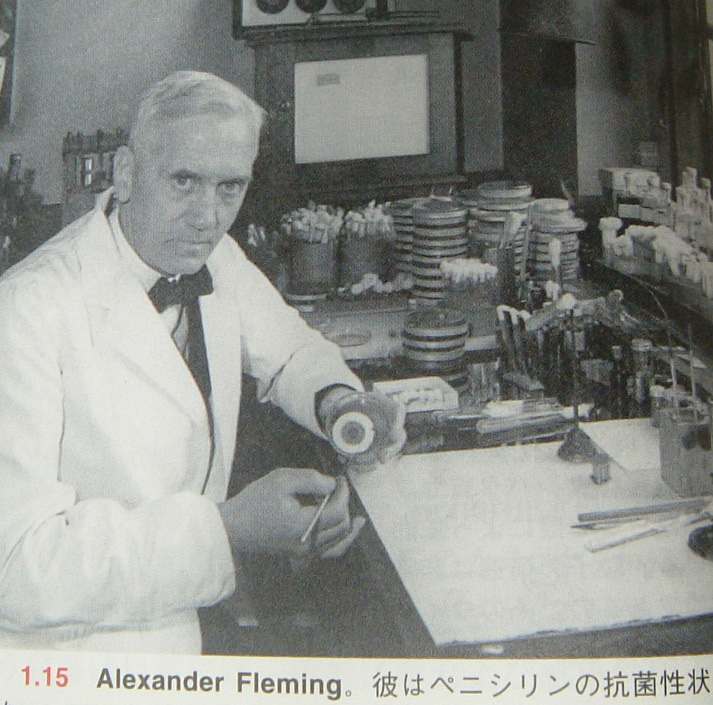
- Discovery of penicillin (1928)
- While culturing staphylococci, mold spores accidentally fell onto a Petri dish, and he noticed that the staphylococci surrounding the mold had dissolved.
- Inspired by this observation, he cultured Penicillium mold in a liquid medium and confirmed through in vitro experiments that the filtered culture fluid contained an antibacterial substance. He named it “penicillin” after the genus name Penicillium (1929).
- In 1940, antibacterial effects in vivo were demonstrated through animal experiments.
- Many wounded soldiers were saved during World War II.
- 1945: Awarded the Nobel Prize in Physiology or Medicine (together with Florey and Chain).
The Discovery of Streptomycin
- Tuberculosis spread among workers and citizens in the rapidly industrializing cities of the Industrial Revolution (mid-18th century to early 19th century) because of worsening labor environments and poor living conditions.
- In Japan as well, it was feared as a fatal disease until shortly after World War II.
- Selman Waksman (American scientist) discovered an antibiotic effective against the tuberculosis bacterium, a pathogen not affected by penicillin.
- After Russia’s defeat in the Russo-Japanese War, Waksman emigrated to the United States.
- He studied agriculture at university for four years and became especially interested in microorganisms in soil.
- He discovered antibiotics from actinomycetes found in soil.
- 1946: Reported the clinical effectiveness of streptomycin against tuberculosis bacteria.
- It inhibits protein synthesis in prokaryotic organisms (bacteria).
- 1952: Awarded the Nobel Prize in Physiology or Medicine.