ReSEACH SUMMARY
The Department of Molecular Biochemistry investigates the mechanism of cancer spread in a basic research of tumor biology. Tumors do not simply grow larger as cancer cells proliferate. We are working to elucidate the fundamental question, "When cancerous tissues spread, where do they go towards, what attracts them, and how do they move and expand? In this context, we are focusing on the formation of mesenchymal tissues containing specific substrates around cancer cells, and are attempting to understand the mechanism of cancer progression, in which changes in the mesenchyme occur extensively first, followed by the spread of cancer cells, and the area of mesenchymal changes further expands in a multifaceted manner.
One type of cancer that is characterized by particularly large stromal changes is scirrhous gastric cancer. Although it accounts for about 10% of all gastric cancers, it is more common in young women and is difficult to detect, resulting in a low survival rate and intractability. As the nickname "hard cancer" suggests, this type of gastric cancer is characterized by abundant fibrosis (fibroblast proliferation). This hinders the penetration of anticancer drugs into the tumor and makes treatment difficult. In recent years, the role of these cancer-associated fibroblasts (CAFs: cancer-associated fibroblasts) and their many variations have attracted much attention.
Extracellular Substrate Asporin Produced by CAFs
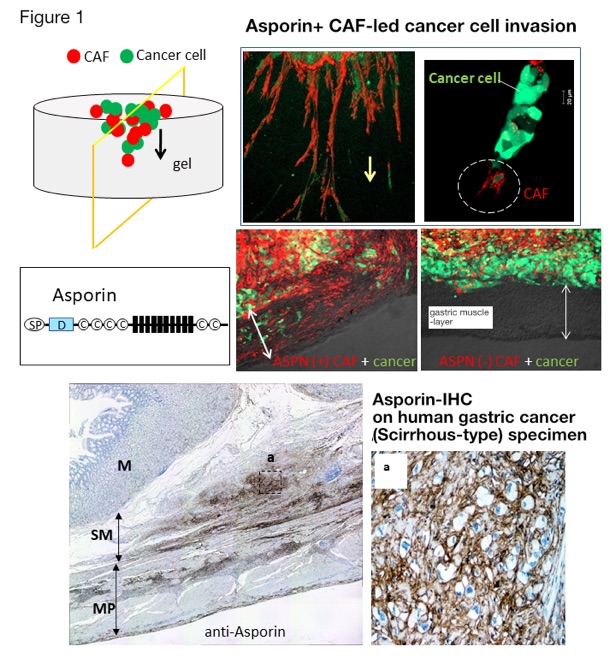
Asporin (ASPN) is Small Leucine-rich Repeat Proteoglycan (SLRP) that is expressed in CAFs, but not cancer cells, in scirrhous gastric cancer and is associated with a poor prognosis group. ASPN-positive CAFs have high invasive potential and produce high levels of proinflammatory cytokines, which may play a role in driving cancer cells. As a result, it was observed that the invasion of gastric cancer cells can be controlled by regulating the expression of ASPN in gastric fibroblasts both in vitro and in the mouse gastric wall. Figure 1 (Oncogene 29, 650-660, 2015)
1. Tumor stroma leads the mechanism of cancer progression