- Surgeon General of the Japanese Navy. In 1875, he studied abroad at St. Thomas’ Hospital in England.
- He argued and demonstrated that beriberi was caused by a diet centered on polished white rice, and promoted brown rice and bread as staple foods. He is also regarded as the originator of Japanese naval curry.
- In contrast, Mori Rintaro (Ogai), an army physician and professor at Tokyo Imperial University, supported the bacterial theory of beriberi and harshly criticized Takaki.
- During the Russo-Japanese War (1904–1905), the Japanese Navy had almost no beriberi patients, whereas the Army, under Surgeon General Mori Rintaro, suffered more than 200,000 cases of beriberi.
- Takaki published papers on beriberi in foreign journals, and in 1906 he was invited to Europe and America, where he received great acclaim (described in Akira Yoshimura’s book White Wake).
- He founded Jikei Medical University and also pioneered nursing education. (St. Thomas’ Hospital was also famous as the hospital where Florence Nightingale worked.)
- Eventually, Christiaan Eijkman demonstrated that a substance contained in brown rice was related to beriberi, and he received the Nobel Prize in Physiology or Medicine in 1929.
- However, in fact, earlier than Eijkman, in January 1911, Umetaro Suzuki (Professor Emeritus of Tokyo Imperial University) published a paper entitled “On the Active Components in Rice Bran” in the Journal of the Tokyo Chemical Society, stating that beriberi was related to a substance contained in brown rice (later named oryzanin). He especially emphasized that the active ingredient in rice bran was an essential nutrient for the survival of both humans and animals, clearly anticipating the later concept of “vitamins.” However, when the paper was translated into German, the sentence “this is a new nutrient” was omitted, and as a result, oryzanin failed to attract worldwide attention. Consequently, Suzuki became known only within Japan as the first discoverer.
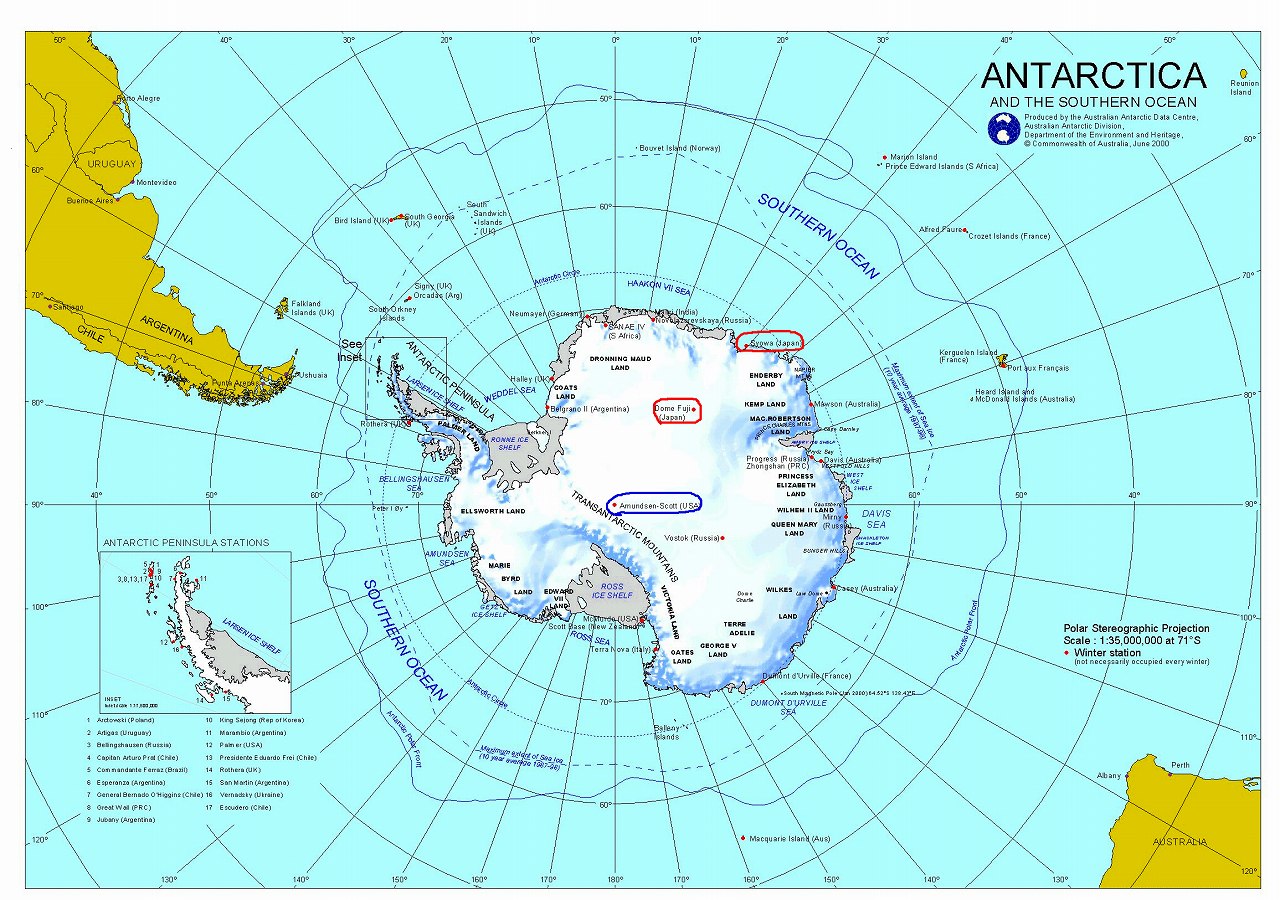
- In Antarctica, there are geographical names honoring individuals who contributed to nutritional science. Takaki Point, located at 65°33′ South latitude and 64°14′ West longitude, is named after Kanehiro Takaki.