|
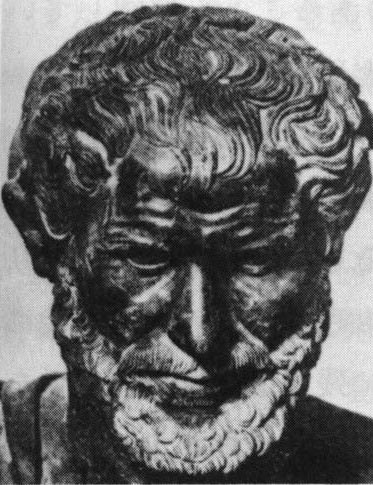
- Greek philosopher and scientist.
- Nature created all animals for the sake of humans.
- In ancient Greece, it was believed that both animals and plants possessed souls.
- His work History of Animals contains anatomical knowledge of human internal organs (such as the heart, blood vessels, lungs, liver, kidneys, and bladder), together with comparative observations among different animal species.
- Excellent observer of nature (although he did not conduct animal experiments).
“A frog gives birth to frogs, and humans give birth to humans.
The substances that form the flesh and skin of a frog are essentially universal (common to all) and are not unique to frogs alone. ...
A force acts toward the goal that a frog should become a frog.
That force exists within the frog itself as a soul, and the frog cannot rest until it becomes a frog.
The frog’s soul is contained within the semen and is transmitted from parent to offspring.”
(Yojiro Kimura: Introduction to Life Science through Original Texts, Kodansha Academic Bunko)
|